Dan Hanson, Apple Valley News Now
Jan 16, 2026 Updated Jan 19, 2026
The Brief
Article Link
• Tri-Tech Skills Center received a $2,500 grant from AgWest Farm Credit to enhance firefighting and EMS training programs for high school juniors and seniors
• The funding will support hands-on learning experiences and help purchase new wildland firefighting equipment, including a chainsaw and portable pump
• Students earn industry certifications, including IFSAC Firefighter 1, Emergency Medical Responder preparation, and FEMA Incident Command System credentials
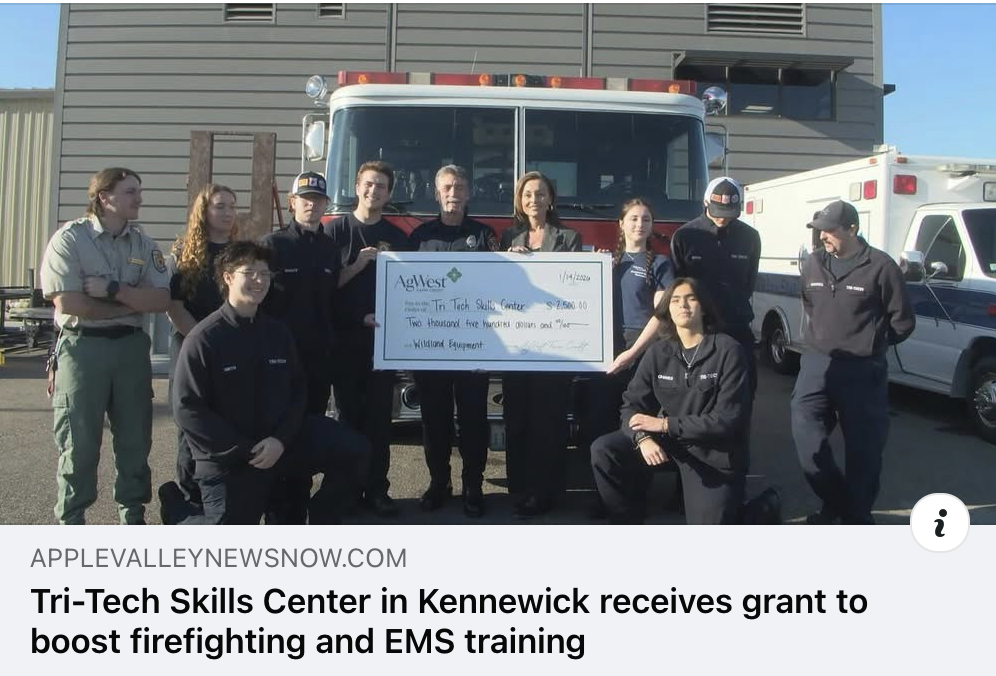
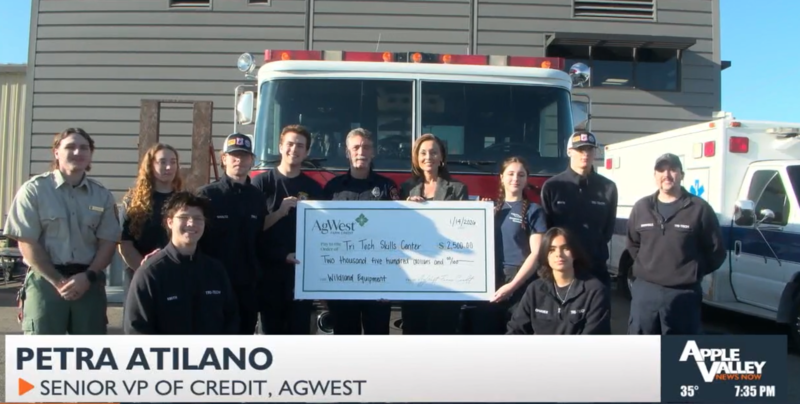
KENNEWICK, Wash. — Tri-Tech Skills Center's firefighting and emergency medical services program received a $2,500 boost from AgWest Farm Credit to strengthen hands-on training for students preparing for careers in emergency response.
The grant, awarded through AgWest's Rural Community Grant Program, will fund practical training exercises including wildland fire and fuels camps, rope rescue exercises, overnight training sessions, and live-fire scenarios. The funding addresses a critical need in southeast Washington, where many emergency responders serve rural areas where help may be miles away.
"We are going to be able to add two new wildfire certification courses," said Nathen Allington, Fire & EMS instructor at Tri-Tech.
The program serves approximately 30-40 first-year students annually, drawing high school juniors and seniors from the Kennewick School District area. With a 95% completion rate, the program has established itself as a reliable pipeline for emergency services careers in the Tri-Cities region.
The grant will also enable the skills center to purchase essential equipment, including a new wildland chainsaw and a portable pump, tools crucial for wildfire response operations and hands-on training scenarios.
Students in the two-year program earn multiple industry certifications that prepare them for immediate workforce entry or advanced training. First-year students complete FEMA Incident Command System certifications (ICS-100, ICS-200, and NIMS 700a) along with Hazardous Materials Awareness and Operations training. Second-year students typically earn IFSAC Firefighter 1 certification and prepare for Emergency Medical Responder national certification.
The comprehensive curriculum includes structural firefighting skills such as hose deployment, search techniques, knots, and water supply operations, as well as wildland firefighting preparation and Basic Life Support training.
The program's impact extends beyond the classroom, as demonstrated by graduate Ashton Linhoff, who completed the program during his junior and senior years of high school. Linhoff now works as a wildland firefighter with the U.S. Fish and Wildlife Service and was recently accepted into an apprenticeship program, a move he credits to his Tri-Tech training.
"The biggest part for me was just understanding what the work was going to be, understanding it is going to be hard work," Linhoff said.
Current students are finding direction through the comprehensive program. Second-year student Abigail Humphrey plans to remain in the local area and work as an emergency department technician at Kadlec Regional Medical Center.
"It was this or law, and I really liked the look of emergency medicine, and I'm glad I chose this. I wouldn't want anything else," Humphrey said.
Fellow second-year student Ethan Wodehouse is using his training as a stepping stone into military service and medicine. After graduation, he will enter Advanced Individual Training with the Army National Guard.
"After I graduate, I'm going to AIT, or Advanced Individual Training, for the Army National Guard. I'm going to Fort Sam Houston to learn to be a combat medic," Wodehouse said.
The grant represents more than just equipment and training opportunities for students. It provides confidence, preparation, and a clear pathway into high-demand careers focused on protecting communities and public lands.
"We're supporting the youth and their desires to move on to wildfires support and help those communities that need those kinds of services," said Petra Atilano, Senior Vice President of Credit at AgWest.
The training program emphasizes real-world application, with students tested in actual field conditions before graduation. This practical approach ensures graduates are job-ready and equipped with industry certifications that prepare them for immediate workforce entry into fire academies or advanced EMT training programs.
The program focuses heavily on developing teamwork, leadership, and critical thinking skills essential for high-pressure emergency situations. Students gain hands-on experience working with local emergency agencies and professional-grade equipment, bridging the gap between classroom learning and real-world application.
The firefighting and EMS program at Tri-Tech Skills Center continues to experience growing demand as communities across the region face increasing needs for qualified emergency responders. The program's success is measured not only by student enrollment but also by the career outcomes of its graduates, who are filling critical roles in emergency services throughout the Pacific Northwest.
Rural communities particularly benefit from this training pipeline, as many areas struggle to maintain adequate emergency response capabilities. The skills center's program helps address this shortage by producing well-trained, certified professionals ready to serve in challenging environments.
The AgWest Farm Credit grant underscores the importance of investing in rural workforce development, particularly in essential services like emergency response. As wildfire seasons become more intense and emergency medical needs continue to grow in rural areas, programs like Tri-Tech's become increasingly vital to community safety and resilience.
Students in the program gain exposure to multiple career paths within emergency services, including wildland and structural firefighting, emergency medical services, and emergency management. This comprehensive approach allows students to explore different specializations while building a strong foundation in emergency response principles that prepares them for entry into fire academies and further EMT training after graduation.