Issaquah School District 411 Article Link
May
18
2026
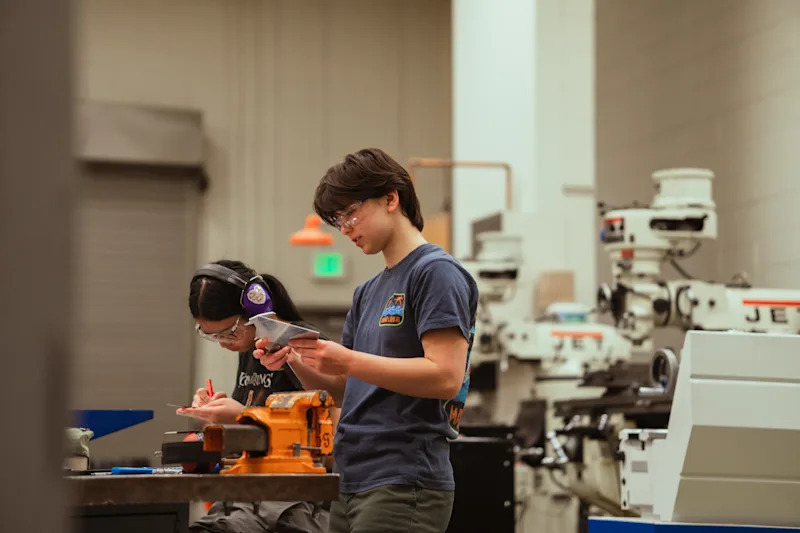
In the shop at Liberty High School, students in Tom Peltzer’s Aerospace Manufacturing class listen as Peltzer describes the “work order” they’ll be filling that day. They read through the order, gather the supplies and tools they’ll need, and start the project. For the next 80 minutes, the shop is filled with the whir of the sander, the quick squeal and buzz of drills and other tools, and conversations about the work.
“One of the most interesting and challenging units in this (class) so far has been learning how to weld, especially when first starting with techniques like MIG welding,” senior William Kirk said. “At first, it seemed simple, just joining two pieces of metal. But once I actually tried it, I realized how much control and precision it takes. Keeping a steady hand, maintaining the right speed, and making sure the weld is strong without burning through the metal was harder than expected.”
“It was challenging because even small mistakes could mess up the entire piece, but that’s also what made it inspiring,” Kirk added. “Over time, I could see my progress, going from messy, uneven welds to cleaner, stronger ones. It felt rewarding to improve a real, hands-on skill that could be useful in real life, not just in class.”
This is the first year Liberty has offered Aerospace Manufacturing as part of WANIC, the Washington Network for Innovative Careers, a cooperative consortium of seven local school districts including Issaquah. Students from throughout our district, as well as the partner districts, are able to take the class as long as they have their own transportation.
Before becoming a teacher, Peltzer worked in precision-machining and manufacturing in Kent, creating aerospace parts for Boeing, Blue Origin and also for small shops.
“Through that work, I gained experience using a variety of industry tools and machines and developed a strong appreciation for precision, quality, safety, and craftsmanship,” he said. “That background has been incredibly valuable in the classroom because it allows me to connect what students are learning to real-world industry practices and expectations.”
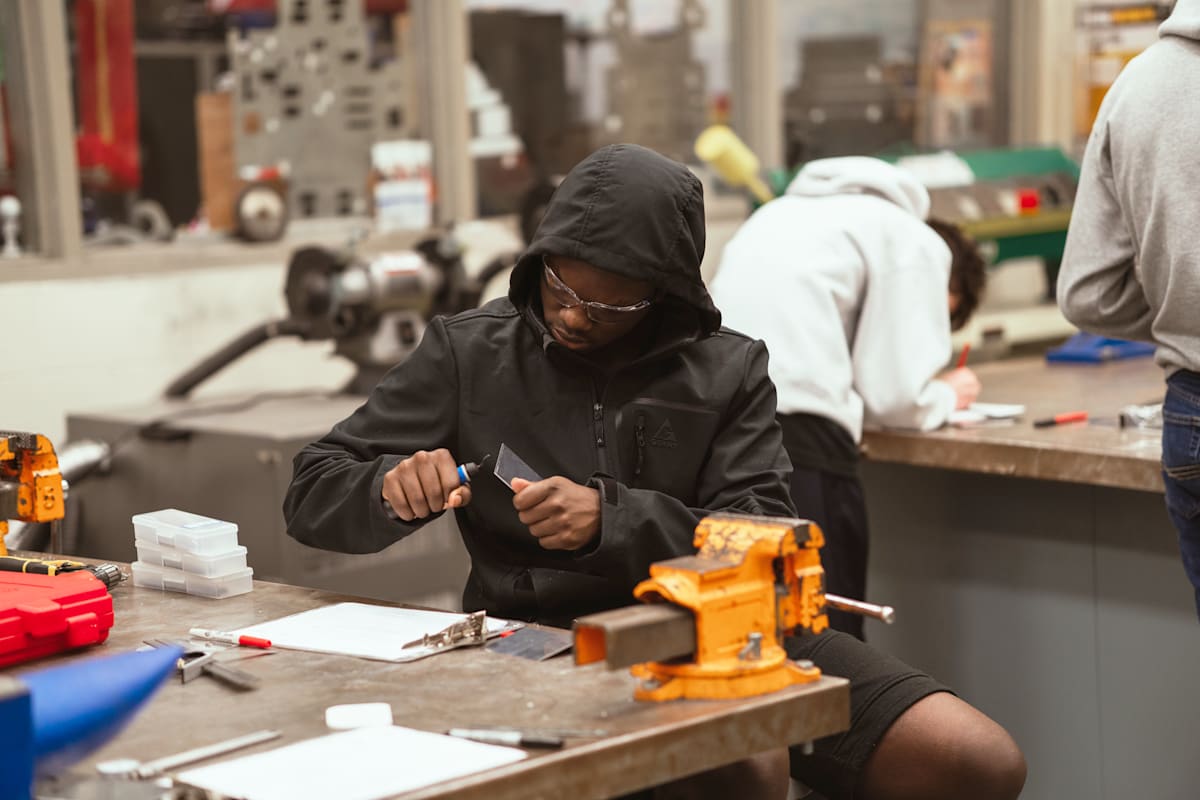
One of the most exciting parts of the course is that students are working with real tools, real materials, and real processes in a way that feels meaningful and hands-on, Peltzer explained. “Skills like precision measurement, layout, drilling, riveting, bending metal, reading technical drawings, and following work orders are especially exciting because students quickly see that their accuracy and effort directly affect the final product,” he continued. “I think students really enjoy the tangible side of this work we do in class.”
The Aerospace Manufacturing course builds upon skills Liberty students learn in metal fabrication and provides them the specific skills for manufacturing an airplane, said Lisa Neighbours, the district’s Director of Career and Technical Education and STEM.
Students who are enrolled in this course currently are interested in aerospace engineering, aviation, or in manufacturing careers in the aerospace industry. The course has several benefits, including access to a high school summer internship with Boeing, Neighbours said. It also gives students who are applying into Boeing’s manufacturing workforce higher consideration because they have this experience learning about some of the manufacturing processes used to assemble airplanes.
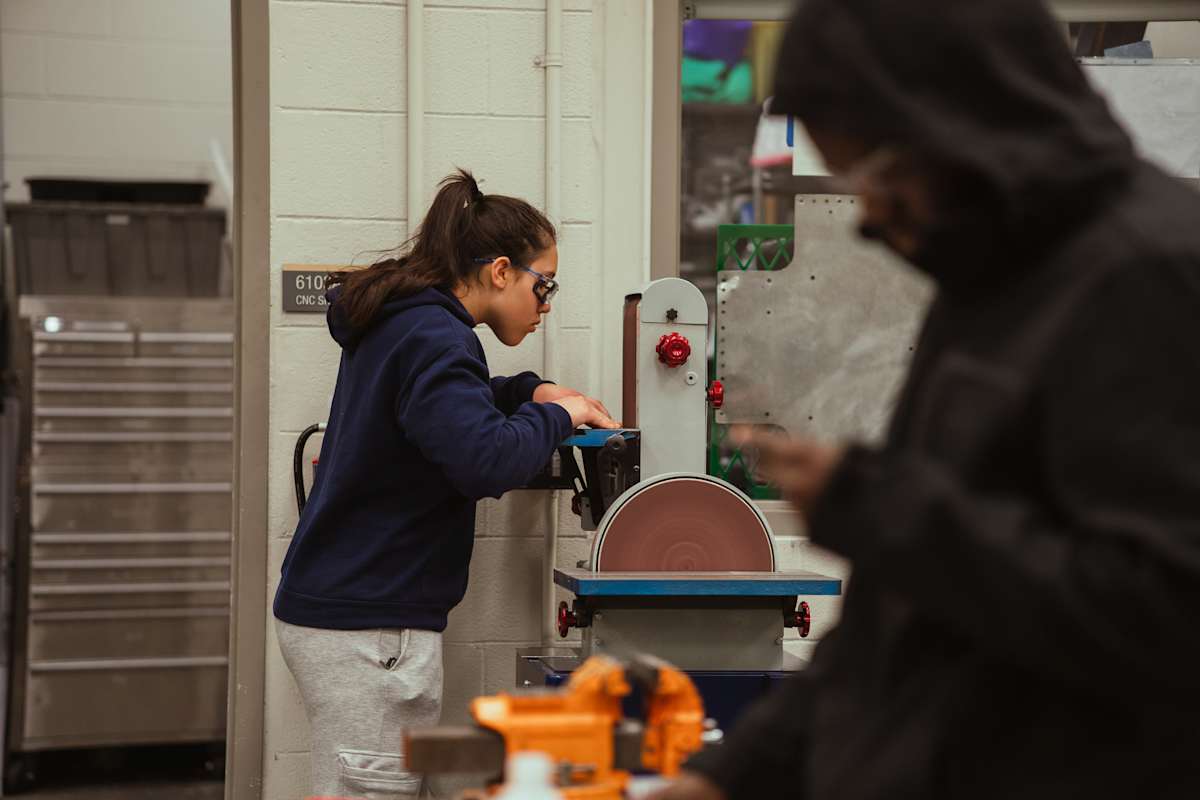
The class prepares students to earn a Core Plus certification. The district is also pursuing Boeing pre-employment training certification, which would allow students to apply for a job with a higher entry-level salary; another goal for the program is to offer a dual-credit opportunity through Renton Technical College’s machining program.
In addition to preparing students for a career in aerospace and manufacturing, Peltzer said he values the way the class naturally connects to so many other skills. “This course reinforces math through measurement, fractions, decimals, and precision; science through materials and properties of metals; and communication through technical reading, workplace expectations, and reflection,” he said. “It also supports broader career-readiness skills, such as problem-solving, teamwork, responsibility, perseverance, and attention to detail. These skills serve students well not only in aerospace and manufacturing but across any career pathway they may choose to pursue.”
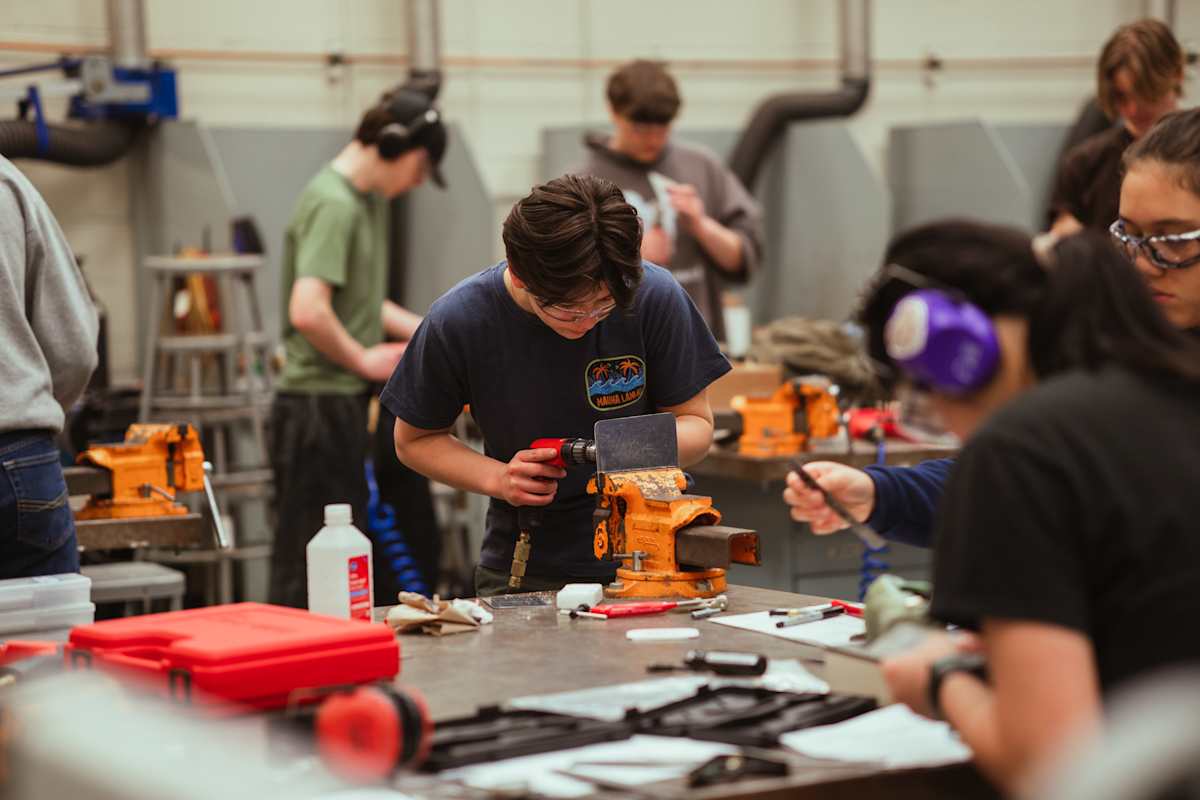
Our students are capable of incredible things when given meaningful, hands-on opportunities, Peltzer said. “This program is not just about learning how to use tools; it is about building confidence, work ethic, pride, and a sense of purpose. Students are learning that high-level technical work is within their reach.”
“As a new class and pathway, I think this program has a lot of potential to connect students with future careers while also showing them the value of precision, persistence, and craftsmanship,” he continued. “I also love that this class helps teach students what it is really like to have a job and what it means to be employable, including the importance of being on time, showing up consistently, being reliable, working with others, communicating well, and building the soft skills that are so important in any workplace.”
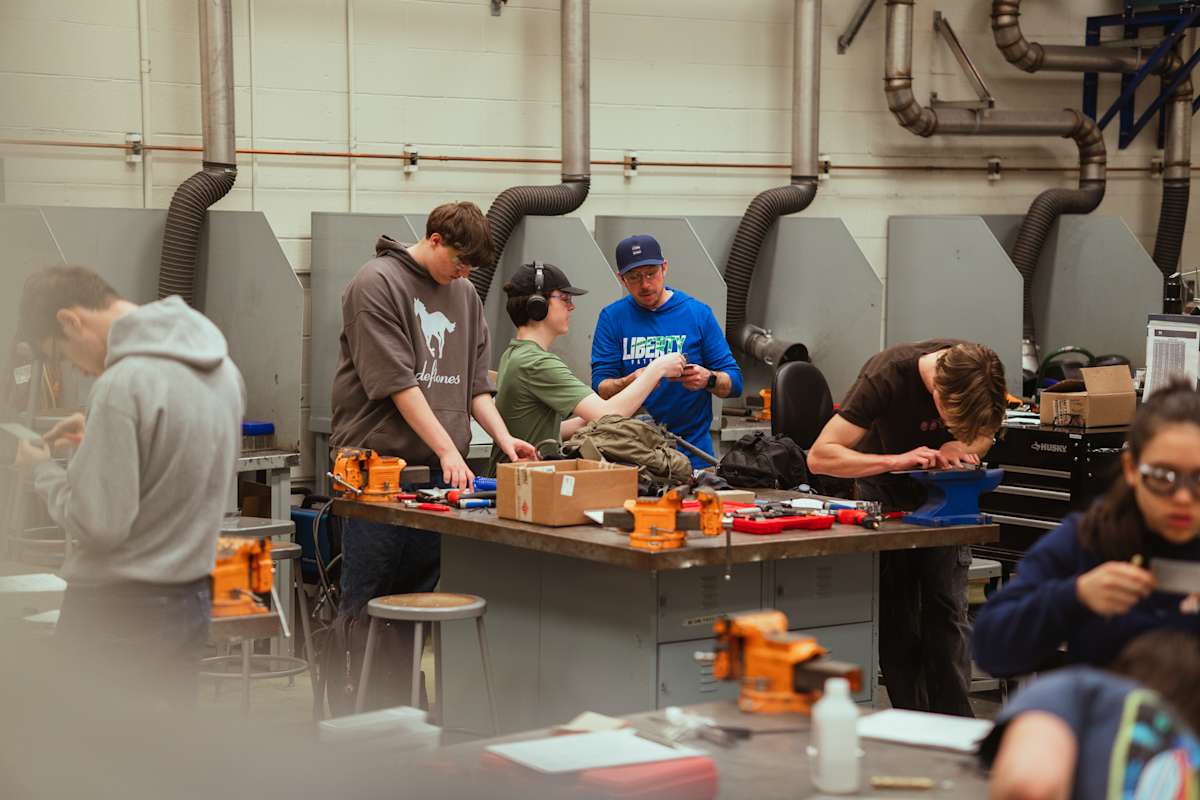
Senior Dylan Belsky said one interesting and challenging aspect of the class has been learning to read a work order and recreate an almost-perfect replica of what was requested.
Junior Evan Burns said he signed up for the class because of his interest in engineering. The projects they have created such as phone holders, toolboxes and clipboards, have involved skills such as riveting. “The projects have taught me how to work better with others, and the basis of working with tools commonly used in the aerospace and engineering industries,” Burns said.
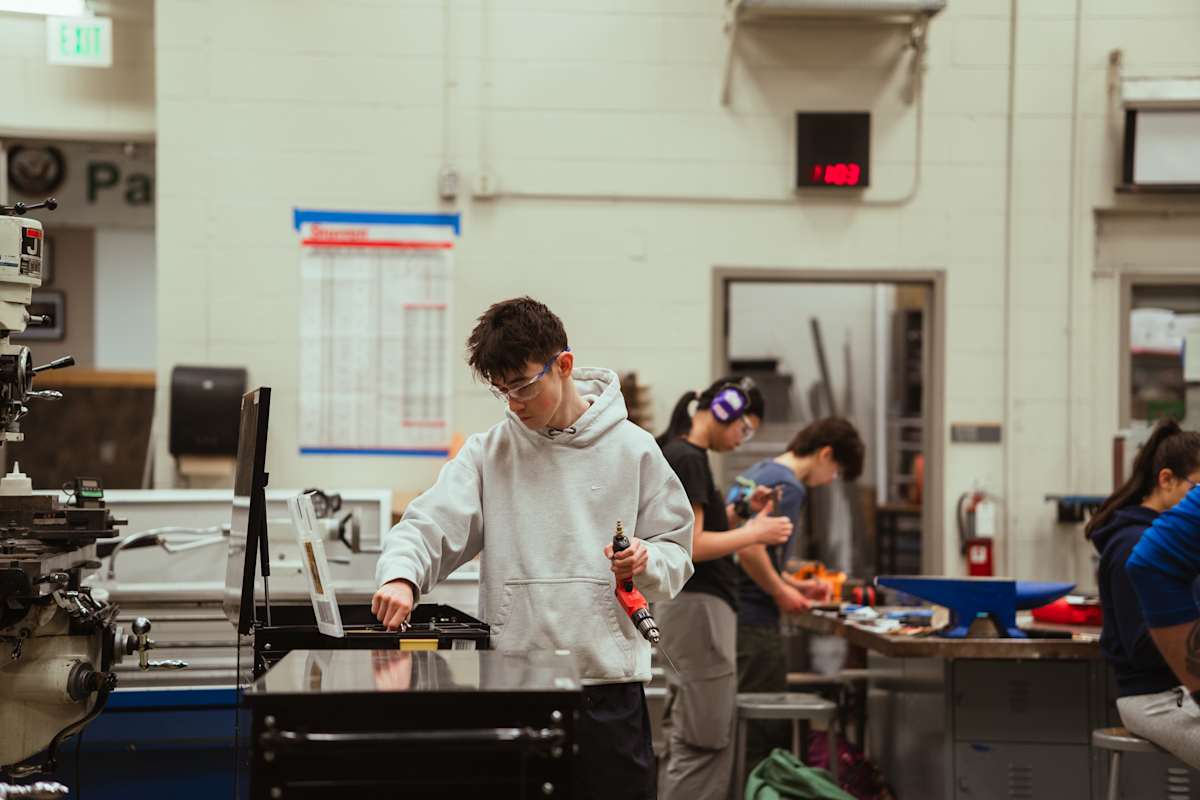
Senior Ellen Liu, who takes the class as a student from a WANIC partner district, said she chose it because it was interesting and she plans to work for Boeing after graduation. It’s important to have options like this “so that high schoolers can see different fields that exist out there and get hands-on experience that can be put on a resume,” Liu said. “The things learned in this class can be translated into real world, hirable experience.”
Asked how they would describe Aerospace Manufacturing in one word or phrase, students in the course replied: “Precise,” “Productive,” “Fantastic,” “Riveting” (an aerospace pun, perhaps?), “Hands-on learning experience,” “FUN!”